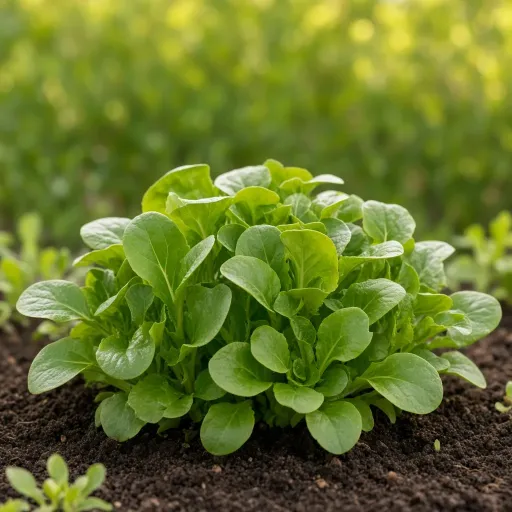
Large Seed Lamb's Lettuce
Valerianella locusta 'À Grosse Graine'
Large Seed Lamb's Lettuce, fleshy and sweet rosettes, very hardy for autumn and winter salads.-
Fleshy rosettes from large seeds, melting texture
-
Very hardy: ideal for autumn and winter salads
-
Rich in omega-3, vitamin C and iron

France


Plant profile
Growing calendar



Growing tips
Preparation and optimal conditions for sowing lamb's lettuce
Sowing Valerianella locusta (lamb's lettuce) is ideally carried out under cover or indoors, before planting out in the vegetable garden. Prepare a light, well-draining substrate, made of good-quality horticultural potting compost mixed with a little perlite, which aerates the roots and prevents young seedlings from suffocating. The soil temperature should be between 10 and 15 °C for even germination and rapid emergence. Sow the seeds very thinly at a depth of 0.5 to 1 cm at most, barely covered with substrate, then keep the moisture constant by gentle daily misting. Avoid heavy watering, which could drown the fragile seeds. Exposure to natural light or under a grow lamp speeds up emergence and strengthens the young plants as soon as they appear.
Germination and care until pricking out
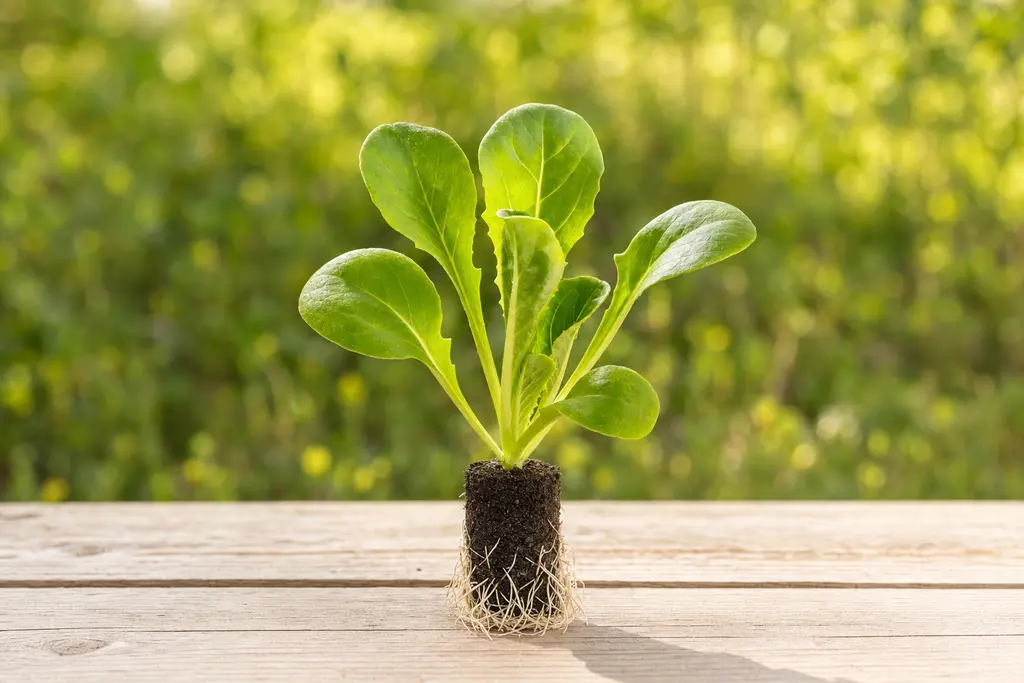
Allow 8 to 14 days for emergence under optimal conditions, with a first true leaf appearing shortly after. During this critical period, maintain regular humidity without excess to prevent fungal diseases. No special pre-treatment is needed for lamb's lettuce: the seeds germinate naturally. Once the first true leaves appear, recognisable by their characteristic shape, distinct from the cotyledons, the seedlings are ready for pricking out into individual pots. This stage marks the end of the critical sowing phase and the beginning of the young plant's development, essential for a successful organic or conventional crop in the garden.
Key takeaway
- Temperature: 10-15°C, constant and sheltered
- Humidity: 70-80% constant relative humidity
- Light: Partial shade to soft light, 4-6 h/day
- Pricking out: 2-3 true leaves, approximately 15-21 days
Conditions and preparation for planting out Large Seed Lamb's Lettuce
Planting out Large Seed Lamb's Lettuce is ideally carried out in autumn, when daytime temperatures are around 15 to 20 °C and the soil reaches at least 8 to 12 °C, taking care to avoid any risk of late frost. To prepare your vegetable bed, start with careful weeding and deep loosening of the soil, then work in 3 to 5 cm of well-rotted compost or enriched horticultural potting compost to structure the substrate and ensure good establishment. A few days before planting, gradually harden off your young plants by exposing them progressively to outdoor conditions for 7 to 10 days, limiting water stress and temperature shocks. Just before planting, dip the roots by immersing them for a few minutes in a light mixture of water and fine soil, or simply in water, to help the soil adhere and ensure continuous root contact.
Planting and optimal establishment of the plant
Plant each seedling at the depth of the root collar, without burying it any deeper, then firm the soil lightly by hand to remove air pockets. Immediately give a thorough watering in a basin so the substrate settles well around the roots and establishes evenly. Keep a spacing of 8 to 12 cm between plants and 15 to 20 cm between rows to promote air circulation and limit diseases. Promptly apply an organic mulch of 5 cm (straw, semi-decomposed compost or plant mulch) around each plant, keeping the root collar clear, to retain soil moisture, regulate temperature and reduce competition from weeds. In exposed or shaded climates, you may install a forcing fleece for the first two weeks to secure establishment.
Key takeaway
- Depth: Root collar level with the soil, root ball well firmed
- Spacing: 8-12 cm between plants, 15-20 cm between rows
- Watering: Generous watering in a basin after planting, then regular
- Mulching / Protection: Organic mulch 5-8 cm, ground cover against evaporation
Managing growth and plant vigour
Large Seed Lamb's Lettuce requires regular, moderate watering, especially during dry periods: allow roughly 15 to 20 mm per week, adjusted to local climate conditions and soil moisture. Prolonged water stress would compromise the quality of the harvest and slow growth. Keep the soil constantly cool by applying an organic mulch (straw, refined compost) 5 to 8 cm thick around the plant, which regulates moisture and limits weeds. For feeding, apply a balanced organic fertiliser at the start of the crop, then split the applications with well-rotted compost or an organic fertiliser every three to four weeks to support vegetative vigour. Regular hoeing of the soil, particularly after watering, promotes aeration of the roots and helps incorporate nutrients. Keep a suitable spacing between plants to ensure good air circulation and prevent damping-off or rot.
Health protection and a balanced environment
Regular monitoring of the foliage helps detect common pests (slugs, aphids) and diseases (downy mildew, collar rot) early. Favour integrated protection based on prevention: avoid excess leaf moisture, ensure good ventilation and space plants properly. Against pests, first use simple measures (hand removal, water sprays) before considering organic solutions approved for ecological growing. Weather conditions strongly influence plant health: excessive humidity encourages fungi, while partial shade in summer protects against excessive heat. Finally, a rigorous crop rotation (avoid growing valerianaceae / lamb's lettuce in the same place for more than two consecutive years) and smart companion planting with other vegetables limit the build-up of specific pests and gradually restore the balance of your organic garden.
Key takeaway
- Soil type: Light, well-draining, cool, neutral pH 6.5-7.0, well-drained and rich in organic matter
- Maintenance: Light hoeing monthly, compost every 4 months, remove weeds around the plant
- Watering: Keep soil moist, 15-20 mm/week, 2-3 times per week depending on temperature
- Preventive action: Organic mulch 5-8 cm, crop rotation, insect/bird netting
Maturity indicators and optimal harvest time for Large Seed Lamb's Lettuce
Large Seed Lamb's Lettuce reaches full maturity approximately 60-80 days after sowing, when the harvested parts show their characteristic appearance and a firm texture. The key indicator of maturity lies in the size and consistency of the parts eaten, without any signs of softening. Harvesting is best done in late morning, once the night dew has evaporated, when the leaves have regained their balanced moisture. Ideal weather conditions are a dry, mild day, between 10 and 18 °C. This organic vegetable crop allows staggered, progressive harvesting, providing a steady yield of superior quality from October to March.
Cutting, handling and optimal storage techniques
Cutting is done with disinfected secateurs or a sharp knife, taking care not to damage adjacent tissue, which could encourage oxidation and shorten the product's shelf life. Harvested parts should be handled gently and placed quickly in clean, well-ventilated containers, away from heat sources. Careful sorting removes any damaged or contaminated leaves, ensuring uniform batches for storage. Rapid pre-cooling to 4 °C is beneficial for optimising storage. Long-term storage is carried out between 0 and 4 °C, with relative humidity maintained between 90 and 95%, for optimal keeping. For short transport to the vegetable garden or point of sale, using ventilated containers and a quick delivery preserves the freshness and nutritional qualities of fresh vegetables.
Key takeaway
- Period: 60-80 days after sowing, from October to March
- Stage: Well-formed rosette, fleshy and tender leaves
- Method: Cut the whole rosette at ground level or leaf by leaf
- Storage: 0-4°C, 90-95% RH, 5-8 days
Flavour profile and culinary preparation of Large Seed Lamb's Lettuce
Large Seed Lamb's Lettuce stands out for its fleshy, tender rosettes, true stars of the modern vegetable garden. Eaten raw or cooked, they offer a mild, nutty flavour and a texture much appreciated. In home cooking, this garden produce excels when prepared in classic ways: raw in salads, with vinaigrette, on toast, or as an accompaniment to cheeses. Its flavours pair harmoniously with walnuts, beetroot, apple, goat's cheese and balsamic vinegar. Raw, the young shoots are best prepared simply with a drizzle of oil to showcase their naturally fresh texture.
Seasoning, nutrition and storage of Large Seed Lamb's Lettuce
This plant-based ingredient is subtly enhanced by a drizzle of olive oil or fresh lemon juice, complemented by aromatic herbs. Rich in vitamins and minerals, it provides a nutritious base. Short-term storage is in the refrigerator for a few days. For long-term preservation, favour freezing after quick blanching where suitable, drying, or other traditional methods. Although often eaten raw, a brief cooking may improve digestibility depending on usage.
Key takeaway
- Flavour profile: Mild, slightly nutty
- Classic preparations: Raw in salads, with vinaigrette, on toast, as an accompaniment to cheeses
- Winning pairings: Walnuts, beetroot, apple, goat's cheese, balsamic vinegar
- Storage: 0-4°C, 90-95% RH, 5-8 days

Companion plants


